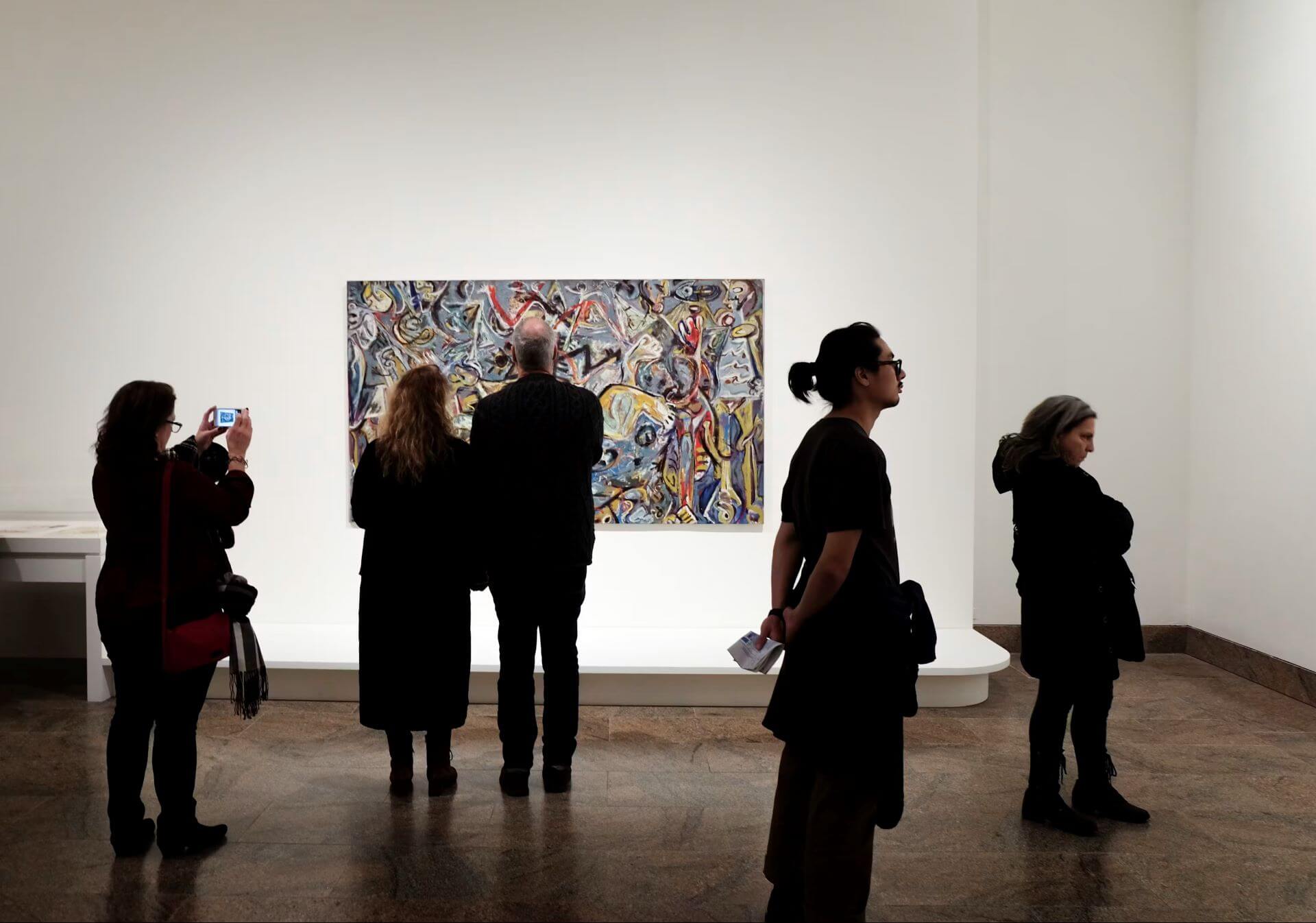
Can we all agree that aside from cafés, museums and galleries have somehow become one of the go-to places for a good day out?
And honestly, it makes sense. They give you something to do without feeling too structured; there is always something new to look at, and you can easily turn one visit into a full afternoon with friends. See an exhibit, walk around the city, grab food after, maybe end up discussing one artwork way longer than expected. It is simple, but it works.
For college students in Metro Manila, that also means there are plenty of places worth exploring without planning a whole trip out of town. You have national museums filled with major works of Filipino art, spaces dedicated to archaeology and natural history, contemporary galleries, and historical sites that make what you learned in class feel a lot more real.
Some are free, some are easy to reach, and a few are close enough to turn into a proper museum-hopping day. So if cafés have already had enough of your allowance, maybe your next free afternoon belongs in a museum.
Must-Visit Museums in Metro Manila: Start With the National Museum
If you have never properly explored the National Museum Complex, this is probably the best place to begin.
The National Museum Complex in Ermita, Manila brings together three major museums around the Rizal Park area: the National Museum of Fine Arts, the National Museum of Anthropology (or the Anthropology National Museum), and the National Museum of Natural History. Their close locations make it easy to move between art, archaeology, anthropology, culture, and natural history without spending half the day commuting across Metro Manila.
Admission is currently free, and the National Museum of the Philippines complex says the central museums are open Monday through Sunday from 9 AM to 6 PM. Walk-in visitors are welcome, although groups of 20 or more need to arrange an advance booking.
You can technically visit all three in one day, but do not treat them like three errands you need to finish before dinner. Each building has enough exhibits and collections to keep you occupied for hours, so start early and give more time to whatever actually interests you.
National Museum of Fine Arts: See the Paintings You Already Know
There is a very different feeling to seeing an artwork in person after spending years encountering it in textbooks, presentations, and online searches.
That is probably what will happen when you finally see Juan Luna's Spoliarium.
The National Museum of Fine Arts houses notable works by Juan Luna alongside collections by other classical Filipino artists, National Artists, modern painters, sculptors, and printmakers. Its 29 galleries and hallway exhibitions give visitors a broad look at the development of fine arts in the Philippines.
Even if you would not normally describe yourself as an art person, there is a lot to enjoy simply by slowing down and paying attention. Look at the composition, scale, color, expression, and details the same way you might study photography, cinematography, fashion campaigns, or visual media online.
Some artworks pull your attention immediately. Others become more interesting after you stand in front of them for a while. That is part of why seeing works like Spoliarium in person feels different from scrolling past them on a screen.
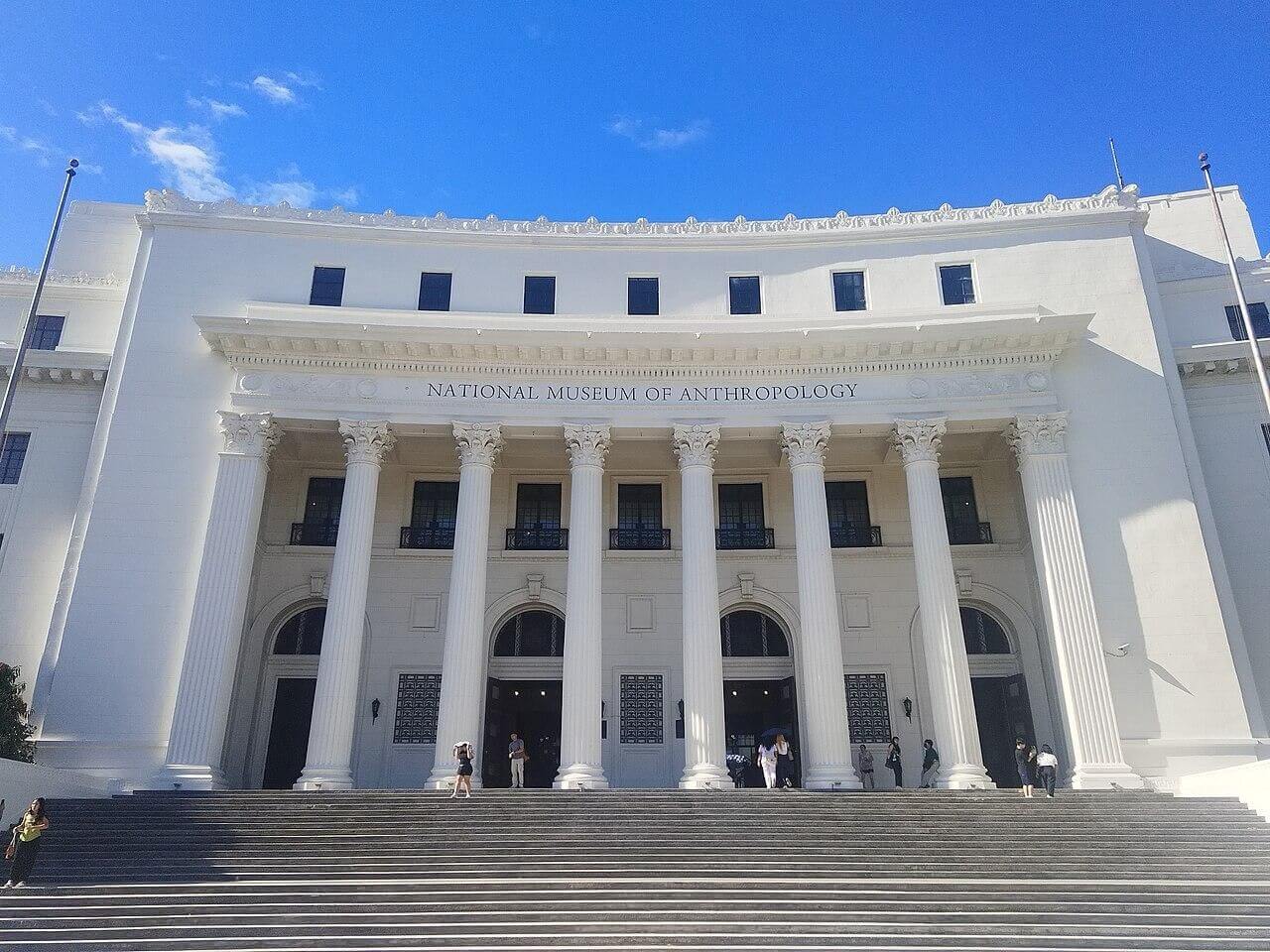
National Museum of Anthropology: Five Floors of Culture and History
If Fine Arts gives you paintings, the National Museum of Anthropology gives you a closer look at the people, communities, objects, and traditions that shaped the country.
The museum occupies five floors and presents archaeological and ethnographic collections connected to different peoples and regions of the Philippines. Its exhibits explore material culture, archaeology, trade, traditional practices, maritime heritage, textiles, ornaments, tools, vessels, and other artifacts that offer a glimpse into Filipino life across different eras.
It is especially interesting if your Philippine history classes seemed to move very quickly into colonization. Anthropology gives more space to precolonial societies and the communities that already had their own systems, crafts, beliefs, technologies, trade networks, and ways of living.
It also makes one thing very clear: there has never been only one version of Filipino culture. The country's diverse ethnolinguistic groups developed distinct traditions and relationships with their environments, and seeing those collections together gives that diversity much more context.
Museum of Natural History: Come for the Tree of Life
If you are going with friends who are less interested in paintings or historical artifacts, the National Museum of Natural History is usually an easy compromise.
The museum features 12 permanent galleries dedicated to the biodiversity and geological history of the Philippines. Visitors can explore exhibits on ecosystems, wildlife, plants, geology, specimens, and environmental science.
At the center of the building is the Tree of Life, a large glass-and-metal structure that has become one of the museum's most recognizable features. Yes, it photographs well, but the real reason to stay is everything surrounding it.
The National Museum of Natural History showcases the country's biodiversity through specimens, interactive displays, illustrations, diagrams, and exhibits that make natural history feel considerably less like memorizing terms for an exam.
If you are doing all three museums in one day, finish here and head toward Rizal Park afterward. Your brain may still want another gallery, but your feet will probably have other opinions.
A Quick Note About Old National Museum Visitor Rules
If you search for National Museum visitor tips online, you may still run into older articles saying most National Museums in Metro Manila are open Tuesday through Sunday, visitors must pre-book, only guests aged 15 to 65 are allowed entry, masks and face shields are required, health declaration forms must be completed, or museums limit entry to 100 guests per day.
Those were pandemic-era rules connected to the reopening of museums after the long COVID lockdowns. They are not the current general visitor rules for the central National Museum Complex.
Current guidelines say the museums are open to everyone, admission is free, and walk-ins are welcome.
So no, you do not need to dig out a face shield from 2021 before going to see Juan Luna.
Must Visit Free Museums for Students on a Budget
One of the biggest advantages of museum hopping in Metro Manila is that you can build a surprisingly full day without spending much on admission.
The National Museum trio easily tops the list of must-visit free museums because one trip gives you access to fine arts, anthropology, archaeology, and natural history without an entrance fee.
Pasig City Museum is another local museum worth checking if you want something more community-focused. Housed in the historic Concepcion Mansion, it explores the city's local history and heritage. Pasig City continued holding museum and arts programming in 2026, although temporary closures and maintenance advisories have occurred, so it is worth checking the city's official announcements before going.
Free museums are also great because you do not have to approach the visit like you are trying to extract maximum value from a ticket. Spend an hour in one section, leave when you have seen enough, and continue your day somewhere else.
The Manila Clock Tower Museum
The Manila Clock Tower Museum, on the 4th level of the Manila City Hall, is located on Padre Burgos Ave. in Ermita, Manila. The building’s iconic hexagonal clock tower, which stands close to 100 feet tall, hosts the museum. The museum, which features a narrow, multi-level, circular layout, spans seven distinct floors, offering visitors a journey through history, governance, contemporary local art, and industrial design. Six floors hold displays and exhibits, with the last floor serving as a 360-degree observation deck.
The Ground Floor and Mezzanine are dedicated to a World War ii immersive exhibit about the 1945 Battle of Manila. The second and third floors feature rotating art galleries that serve as incubation spaces for works by local and contemporary Filipino visual artists. Guests will find a cozy coffee shop on the fourth level where refreshments are available. Level five presents a staged replica of the City Mayor’s office, while level six allows visitors to stand inside and appreciate the core of the tower. Here, they are permitted to observe the mechanisms of the four exterior clocks.
Finally, the seventh and last level is the museum’s observation deck, where visitors can gaze in awe at unobstructed panoramic views of Intramuros, the Pasig River, and the Manila cityscape.
Ayala Museum: History With Very Good Curation
If you like museums where everything feels carefully put together, Ayala Museum is worth the trip to Makati City.
The museum is known for its historical dioramas, art collections, archaeological pieces, and precolonial gold artifacts. Its exhibitions give visitors a compact but detailed introduction to Philippine history and culture, with design and presentation playing a major role in how those stories are told.
This is a particularly good choice for students who enjoy visual storytelling. Instead of moving through one huge national collection, you get a more edited museum experience that connects objects, history, art, and design in a very deliberate way.
Because Ayala Museum is a paid venue with scheduled entry arrangements, check its official booking platform before visiting for current admission rates and available times.
By Richard Espiritu, Mei Tanchico, DK Solis (Wikipedia Takes Manila participant) - Uploaded from Wikipedia Takes Manila, CC BY-SA 3.0, https://commons.wikimedia.org/w/index.php?curid=14626635
Contemporary Art at the Metropolitan Museum
Sometimes the best museum experience is seeing something you do not immediately understand.
The Metropolitan Museum of Manila, now located in BGC, focuses on modern and contemporary visual arts through rotating exhibitions by Filipino and international artists.
Contemporary art can involve paintings, installations, sculpture, photography, digital media, mixed media, and works that are deliberately open to interpretation. You might walk into a gallery, stare at something for a minute, then immediately ask your friend what they think it means.
That conversation is half the fun.
The Metropolitan Museum previously operated at the BSP Complex before moving to its current location, and because exhibitions rotate, checking the museum's official site before visiting is the easiest way to know what is showing.
Students interested in contemporary visual arts can also explore smaller galleries around the metro, including the Museum of Contemporary Art and Design along Dominga Street near the Taft and Benilde area.
Pintô Art Museum: Worth the Antipolo Day Trip
Technically, Pintô Art Museum is not in Metro Manila. It is in Antipolo, Rizal, but it deserves a mention because it has become one of the most recognizable nearby museum day trips.
Pintô Art Museum is a contemporary museum and exhibition space that showcases Philippine contemporary art, with works and exhibitions that often engage with Filipino identity, local communities, indigenous perspectives, social issues, and culture. The museum was founded in 2010 and sits within Antipolo's museum and arts complex.
This is the option for the day when everybody actually has enough time to leave the metro. The museum itself is large enough to explore slowly, and the combination of art, architecture, gardens, and open spaces makes it feel more like an entire afternoon than a quick gallery stop.
Yuchengco Museum: An Easy Makati Art Stop
If you are already in Makati City, Yuchengco Museum is another cultural space worth adding to the plan.
Located at RCBC Plaza along Ayala Avenue, it showcases art, design, cultural collections, and rotating exhibitions in a more compact setting. It is particularly convenient if you want to fit a museum into a Makati afternoon without committing several hours to one massive building.
Students interested in the wider arts scene should also keep an eye on October, which is recognized in the Philippines as Museums and Galleries Month. It is usually a good time to explore exhibitions, cultural programming, and smaller galleries that may not normally appear on your weekend plans. Check their post on scheduled exhibits to make sure you get your money's worth.
Museo ng Katipunan: History Where It Happened
There is something about visiting a historical site that makes information stick differently.
Museo ng Katipunan sits in the Pinaglabanan area of San Juan City and focuses on the Katipunan and the Philippine Revolution. Instead of simply memorizing names and dates, visitors get a more focused look at the people, objects, and ideas connected to the revolutionary movement.
Nearby Museo El Deposito adds another layer to the area by exploring the historic underground reservoir connected to Pinaglabanan.
For students researching Philippine history, San Juan gives you something a large general museum cannot always provide: a strong connection between the exhibits and the location itself.
Chinatown Museum: Binondo Beyond the Food Crawl
Let us be honest, most student plans involving Binondo begin with food. Fair.
But if you are already there, Chinatown Museum gives you a completely different reason to stay in the area.
Located inside Lucky Chinatown, the museum explores the history and culture of Binondo, founded in 1594 and widely described as the world's oldest Chinatown. Its galleries recreate different parts of life in the district and show how trade, migration, commerce, religion, transportation, and the Filipino Chinese community shaped Binondo over several centuries.
The museum currently lists opening hours from Tuesday through Sunday, 10 AM to 6 PM.
This one works particularly well because it can turn an ordinary Binondo food crawl into something with a little more context. Suddenly those old streets and businesses are not just background for your dumpling photos.
Casa Manila and Museo ni Rizal: Make Intramuros a Museum Day
If you want something that feels more like exploring a neighborhood than visiting one building, Intramuros is the obvious choice.
Casa Manila recreates aspects of upper-class life during the Spanish colonial era through architecture, furniture, interiors, and household objects. Instead of simply reading about colonial society, you can physically walk through spaces designed to show how wealthy families lived during the period.
Then continue toward Fort Santiago, where Museo ni Rizal explores the life and final imprisonment of Jose Rizal.
The nice thing about Intramuros is that the museum visit does not really stop when you walk outside. The streets, walls, plazas, churches, heritage houses, and old structures around you continue the history lesson without making it feel like one.
Just make time for food and something cold to drink. Manila history may be fascinating, but Manila weather remains committed to the bit.
What Are the Best Museums in Manila?
The answer depends entirely on what you actually want to see.
For major Filipino paintings and classical Filipino artists, the National Museum of Fine Arts is the obvious starting point. If archaeology, ethnography, artifacts, and cultural traditions interest you more, prioritize the National Museum of Anthropology.
For biodiversity and natural history, head to the National Museum of Natural History. Ayala Museum works well for tightly curated history and design, while the Metropolitan Museum and Pintô Art Museum appeal more to visitors interested in contemporary art.
Museo ng Katipunan and Intramuros are particularly strong if you prefer experiencing Philippine history through actual locations.
As for which Manila museum has the most artifacts, there is no clean official ranking because museums categorize their collections differently. The National Museum system holds extensive national collections across fine arts, archaeology, anthropology, ethnography, zoology, botany, geology, and cultural heritage, so it makes more sense to choose according to the collection you want to explore.
Build Your Own Metro Manila Museum Hopping Day
If you want the easiest route, start with the National Museum Complex in Ermita. Do Fine Arts first, continue to Anthropology, take a real lunch break, then finish with Natural History and Rizal Park.
If you are more interested in art and design, Makati gives you Ayala Museum, Yuchengco Museum, and the Makati Museum along JP Rizal Street, while BGC adds the Metropolitan Museum if you have enough time to move between locations.
For history, Intramuros is practically a ready-made itinerary. Casa Manila, Fort Santiago, Museo ni Rizal, and the surrounding heritage sites can easily fill half a day.
And for something different, make Binondo the plan. Visit Chinatown Museum, explore the neighborhood, then continue directly into the food crawl everyone was probably planning anyway.
There Is More to Metro Manila Than the Usual Hangout Spots
College life can settle into a very predictable rotation if you let it. Classes, cafés, malls, restaurants, your friend's condo, then the same places again next week.
Museums give you an easy way to change that without needing a huge budget or elaborate itinerary.
You can explore with friends, see artworks you have only encountered online, learn something completely unrelated to your course, discover a new gallery, or finally understand a piece of Philippine history that never fully clicked in class.
For students living around Manila's University Belt and other Vista Residences locations in Metro Manila, that accessibility can become part of everyday city life. A free afternoon can take you toward the National Museum, Intramuros, Binondo, a contemporary gallery, or another part of the metro worth exploring without turning the day into a complicated trip.
So the next time everyone asks where to go, maybe give the café a break. Pick a museum, bring your friends, keep your student ID with you, and see what is showing.
.png)