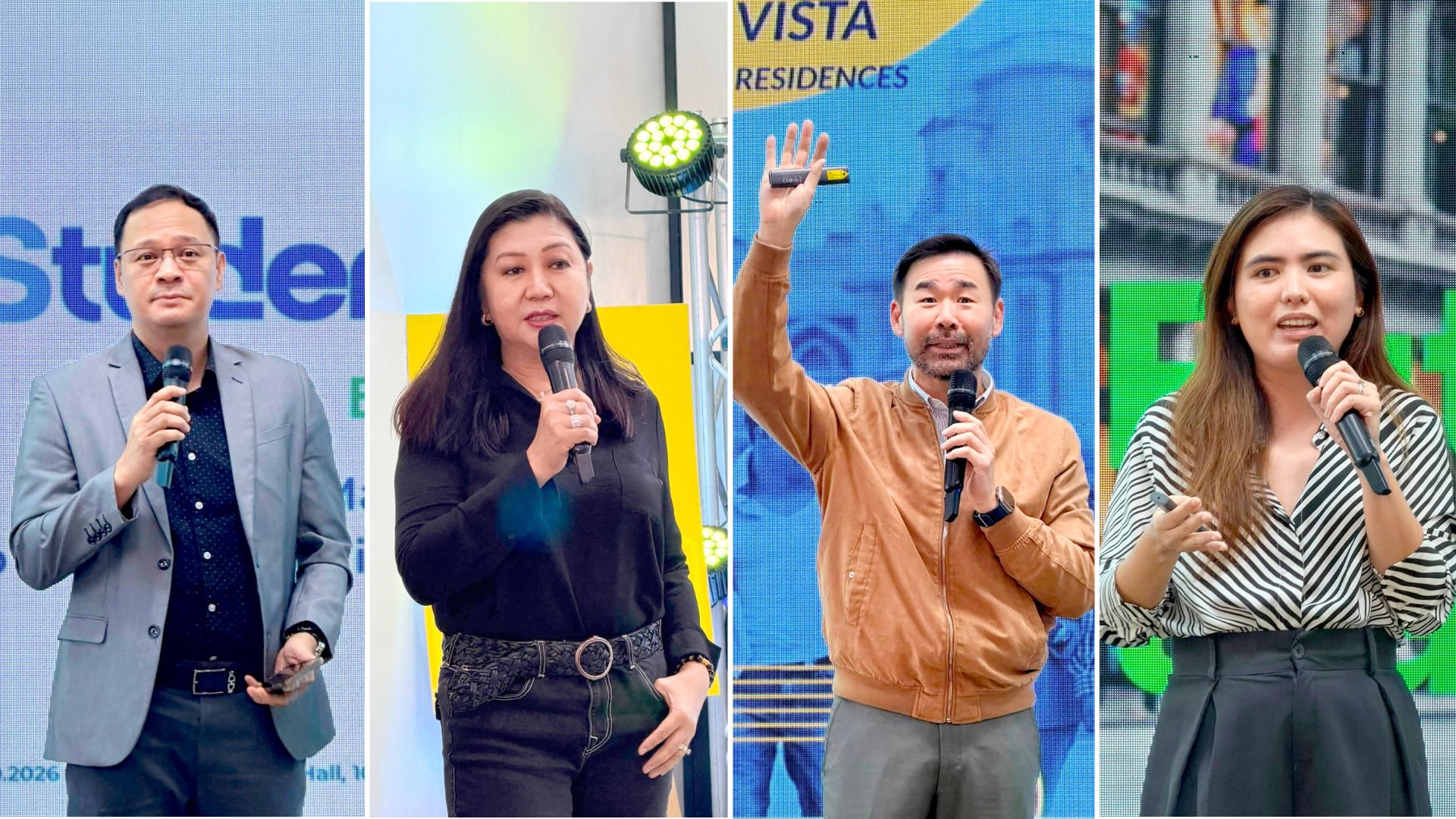
Vista Residences Group Head Engr. Michael Palisoc with distinguished INQ Talks speakers Ar. Cathy Saldaña, Carl Dy, Kris Cabaltera, and Michelle Perez highlighting the importance of architecture, investment, and consumer insights in redefining student living.
Vista Residences invited speakers from architecture, investment, and consumer insights at INQ Talks: Student Living Redefined: From Market Insight to Sales Impact in Academic Housing. The latest leg of A Discussion with the Experts, presented in partnership with Inquirer Property, engaged real estate brokers and sales professionals in examining market movements and meaningful opportunities emerging from a deeper understanding of the student segment.
As priorities continue to evolve, academic housing is becoming increasingly significant in the property market. Proximity to universities remains important, but the conversation now also considers how students streamline their schedules, socialize, recharge, and prepare for professional life.
Opening the program, Vista Residences Group Head Engr. Michael Palisoc welcomed participants and provided context for discussions linking residential requirements to market relevance.
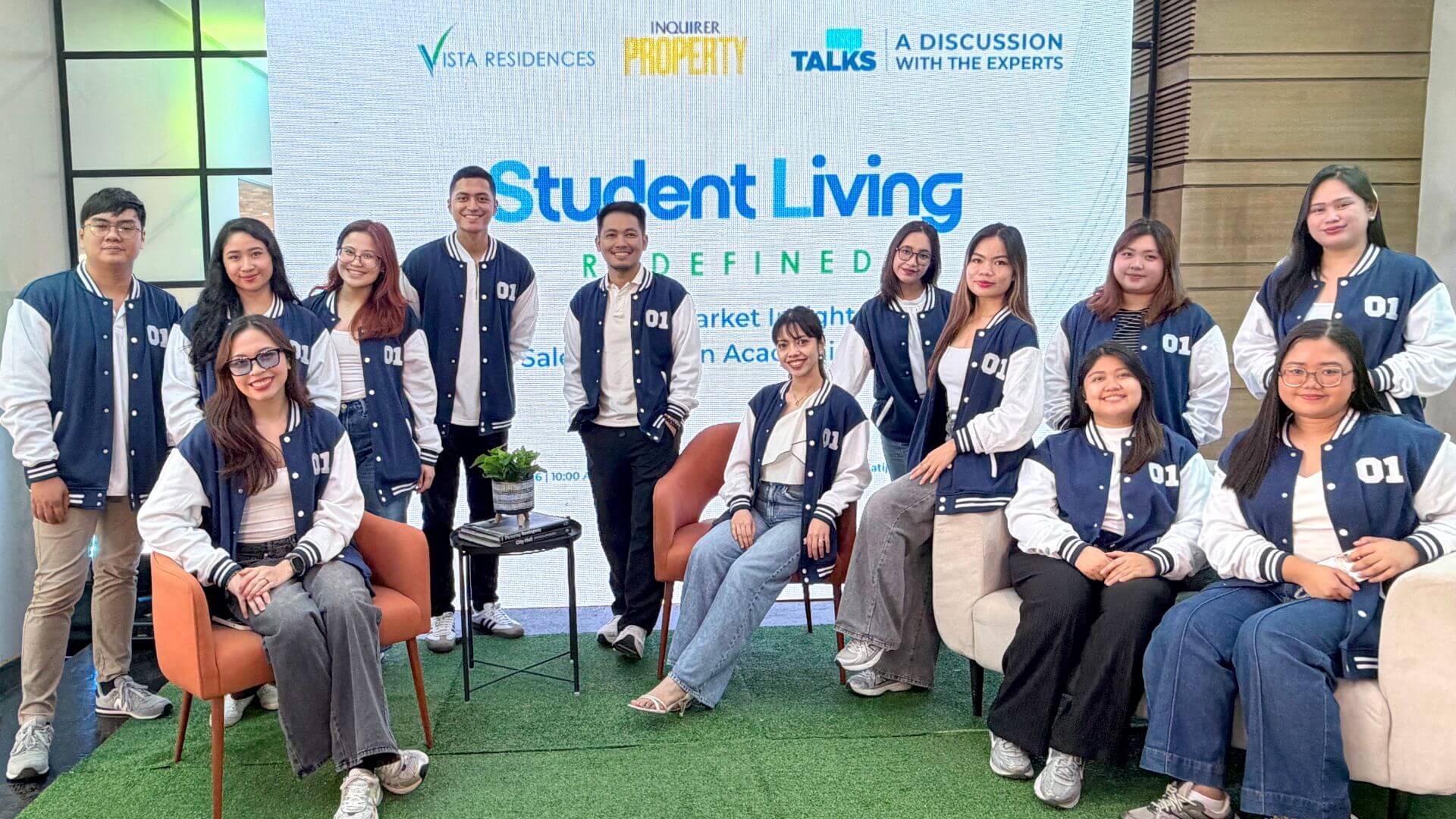
The Vista Residences Marketing Team at INQ Talks: Student Living Redefined: From Market Insight to Sales Impact in Academic Housing, presented in partnership with Inquirer Property.
Dynamic demands
The first presentation placed architecture at the center of evolving expectations. Ar. Cathy Saldaña, Principal and CEO of Projects Design Plus (PDP) Architecture, presented ‘Vertical Living for the Next Generation: Designing Communities Students Want to Live In.’
Her session explored how residential design is moving beyond conventional layouts to consider the full living experience within a vertical community. For younger residents, a condominium property can serve several purposes throughout the day: focused study and flexible work, as well as rest, recreation, and interaction.
Spacious lounges, study areas, common areas, and convertible amenities can shape how students experience their addresses and how well a high-rise development meets contemporary living needs. Saldaña also introduced the idea that architecture must respond to realities beyond the building itself, from traffic and flooding to commuting and connectivity. Designing with this sensibility in mind means creating for the conditions through which daily life unfolds.
The discussion also raised a design consideration: distinguishing passing preferences from purposeful provisions that remain functional and flexible over time.

Inquirer Property Editor Tek Samaniego and industry experts convene for a dynamic panel discussion on the market drivers shaping next-generation student communities.
Identifying investment prospects
Carl Dy, President of Spectrum Investments, delivered ‘Why University Communities are the Next Smart Property Investment,’ examining academic housing through the lens of property performance and portfolio potential.
University clusters benefit from an underlying characteristic valued in real estate: recurring demand. Dy pointed to the market's built-in renewal, with the demographic refreshing itself roughly every four years, while parents, graduates, and early-career professionals continue to participate in the broader property market surrounding educational institutions beyond the academic cycle.
Yet the dialogue emphasized that proximity alone does not determine property investment. Location must be assessed alongside factors such as occupancy outlook, rental returns, accessibility, asset management, and development in the districts to which they belong. Shorter commutes, street access, service delivery, and selective corporate recruitment events within condominiums can also enhance value by giving residents more freedom.
Understanding these fundamentals also enables investors to view academic housing as a residential purchase and an asset whose value may extend beyond a single semester or student tenancy. As Dy emphasized, real estate brokers and sales professionals are not simply selling real estate; they are presenting a future that includes use by one’s children, an income stream from leasing, or continued relevance as students enter the workforce.
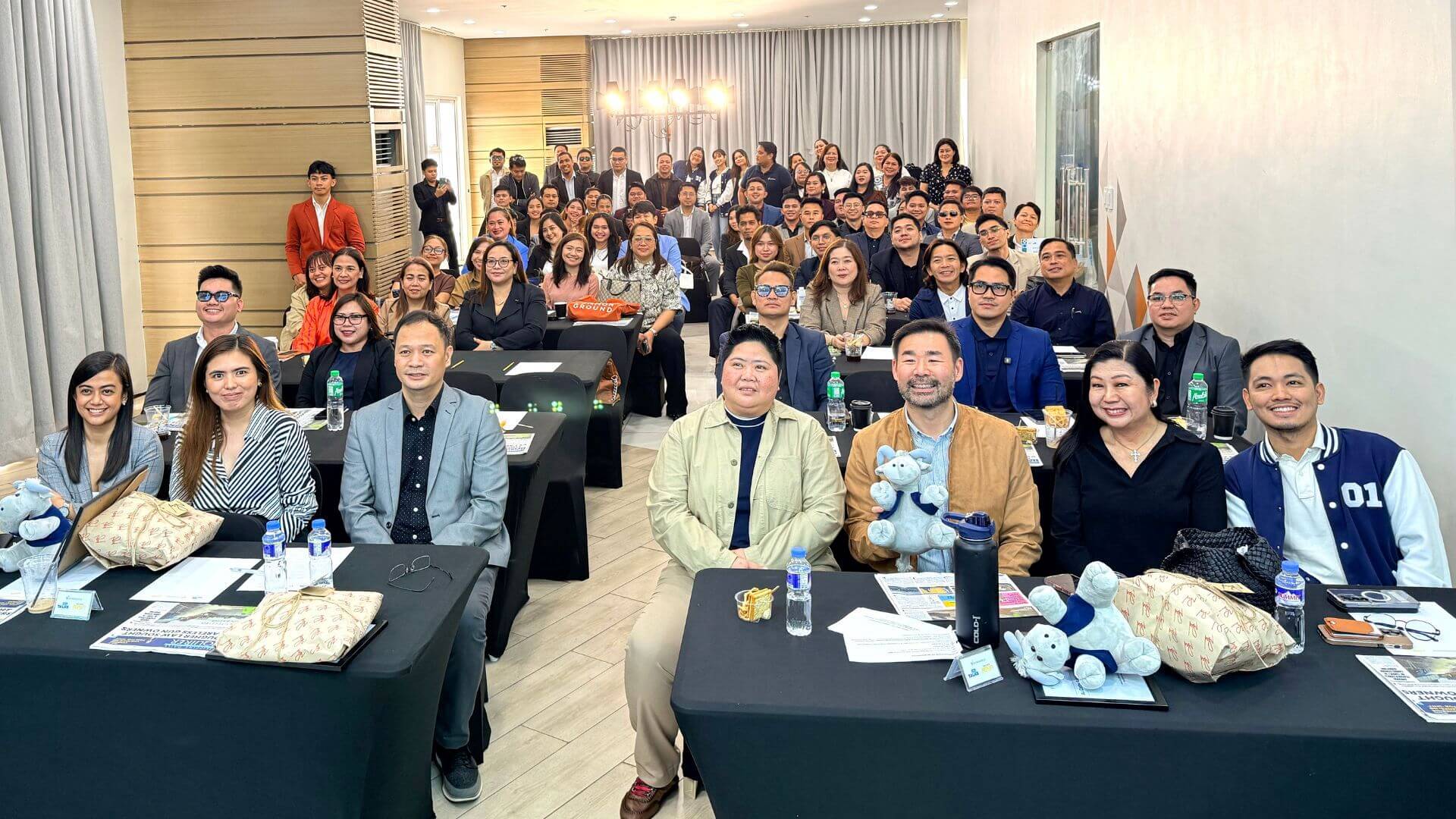
Event proponents, guest speakers, and attendees captured a milestone moment by posing for a commemorative group photo at the forum's conclusion.
Reading residential trends
Kris Cabaltera and Michelle Perez of Human8 presented ‘What Gen Z Wants: Rethinking Student Living for the Next Generation,’ examining how younger residents shape vertical home designs. Having grown up in a highly connected, experience-led environment, Gen Z brings distinct expectations to academic housing. They seek a balance between safe, functional spaces that offer familiar reassurance and expressive environments that cultivate individuality.
Concurrently, fast-paced lifestyles place a premium on simplicity and security. Younger residents prioritize flexible, technology-driven solutions that support daily momentum while enhancing personal well-being and social interaction. Rather than evaluating student housing solely by proximity to school, the session framed it around behavioral patterns: how students select, spend, and structure their routines to make an urban residential environment truly useful.
Vista Residences executives, guest speakers, and sales professionals gather at INQ Talks for a collaborative forum to discuss shifting market demands and business opportunities in the student housing sector.
Connecting conversations to capability
Following the individual presentations, Inquirer Property Section Editor Tek Samaniego moderated a panel that connected architecture, investment, and consumer insights. The conversation examined the drivers of changing academic housing trends: which features can remain relevant for decades; how buyers and investors can capitalize on property appreciation and income-generating potential; and which assumptions about Gen Z warrant deeper examination.
The panel outlined three indispensable priorities for the next decade of academic housing: architecture must adapt to urban realities, investments must anticipate recurring student demand, and residential experiences must deliver identity, independence, and immediacy.
The program concluded with the presentation of Certificates of Appreciation to Ar. Cathy Saldaña, Carl Dy, Kris Cabaltera, Michelle Perez, and Tek Samaniego.
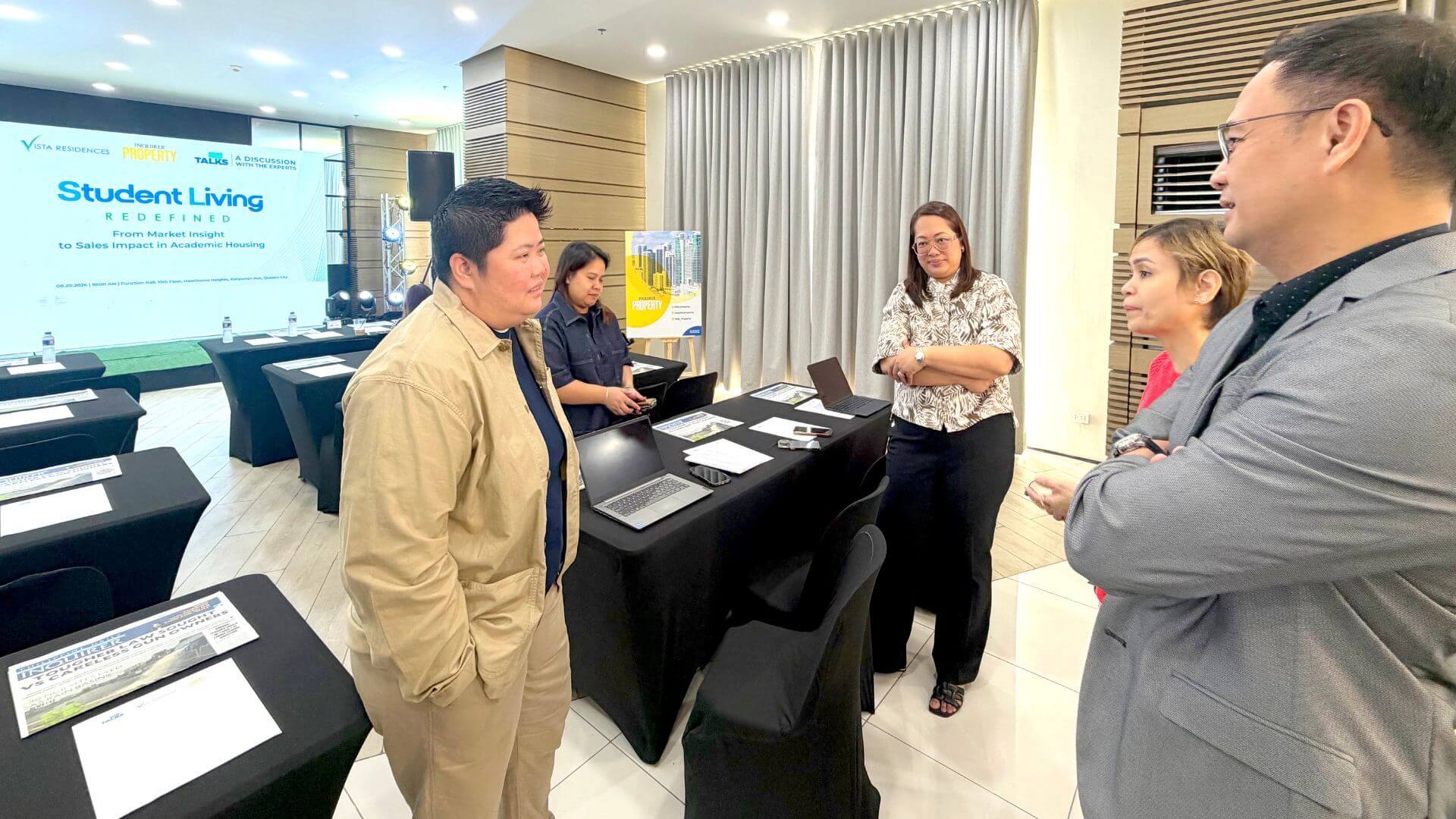
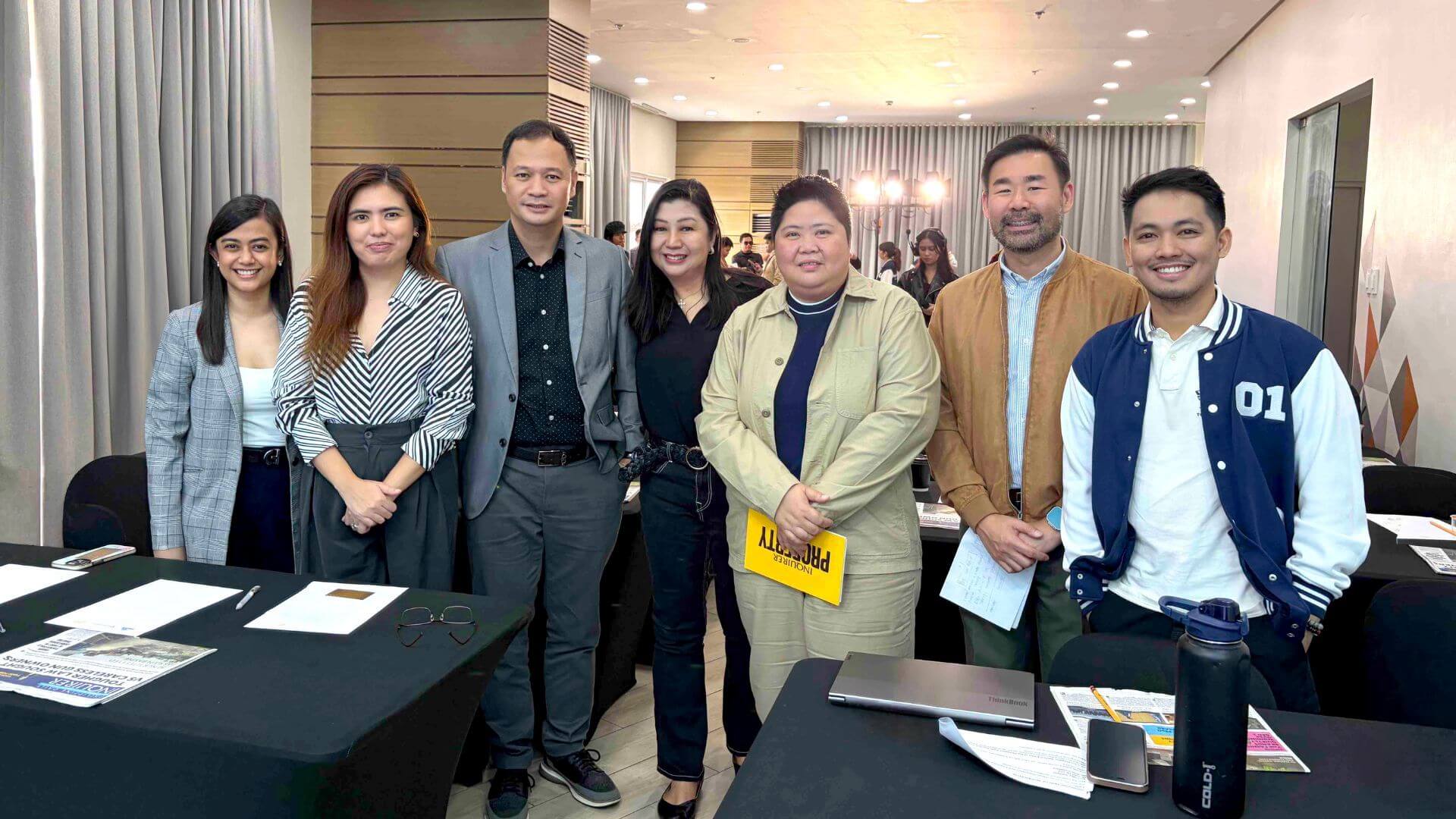
Convening ahead of the program's opening, Vista Residences and Inquirer Property engaged in a preliminary exchange to align on insights into the evolving needs, opportunities, and future of student housing.
Uniting universities with urban living
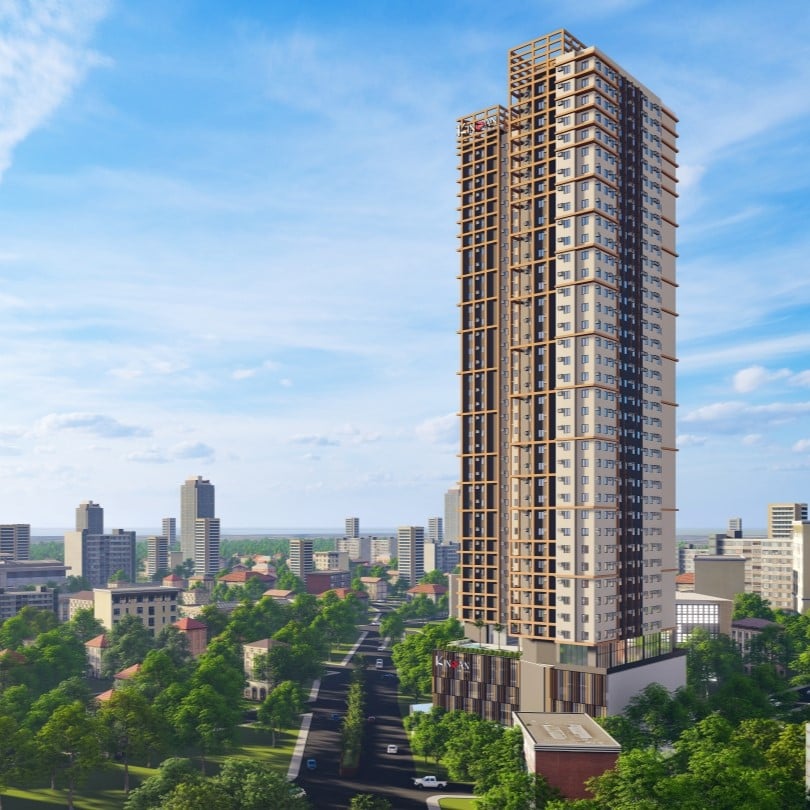
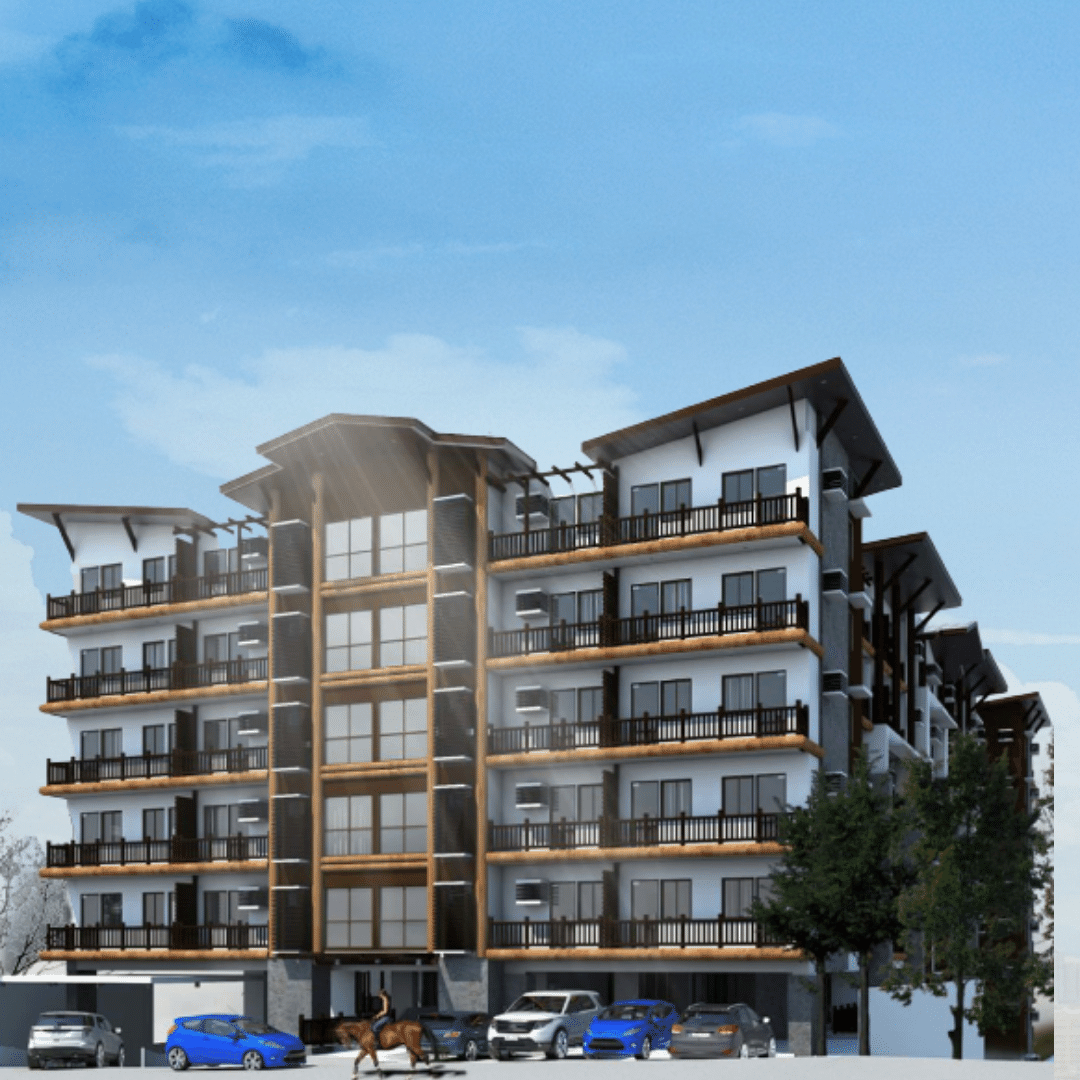
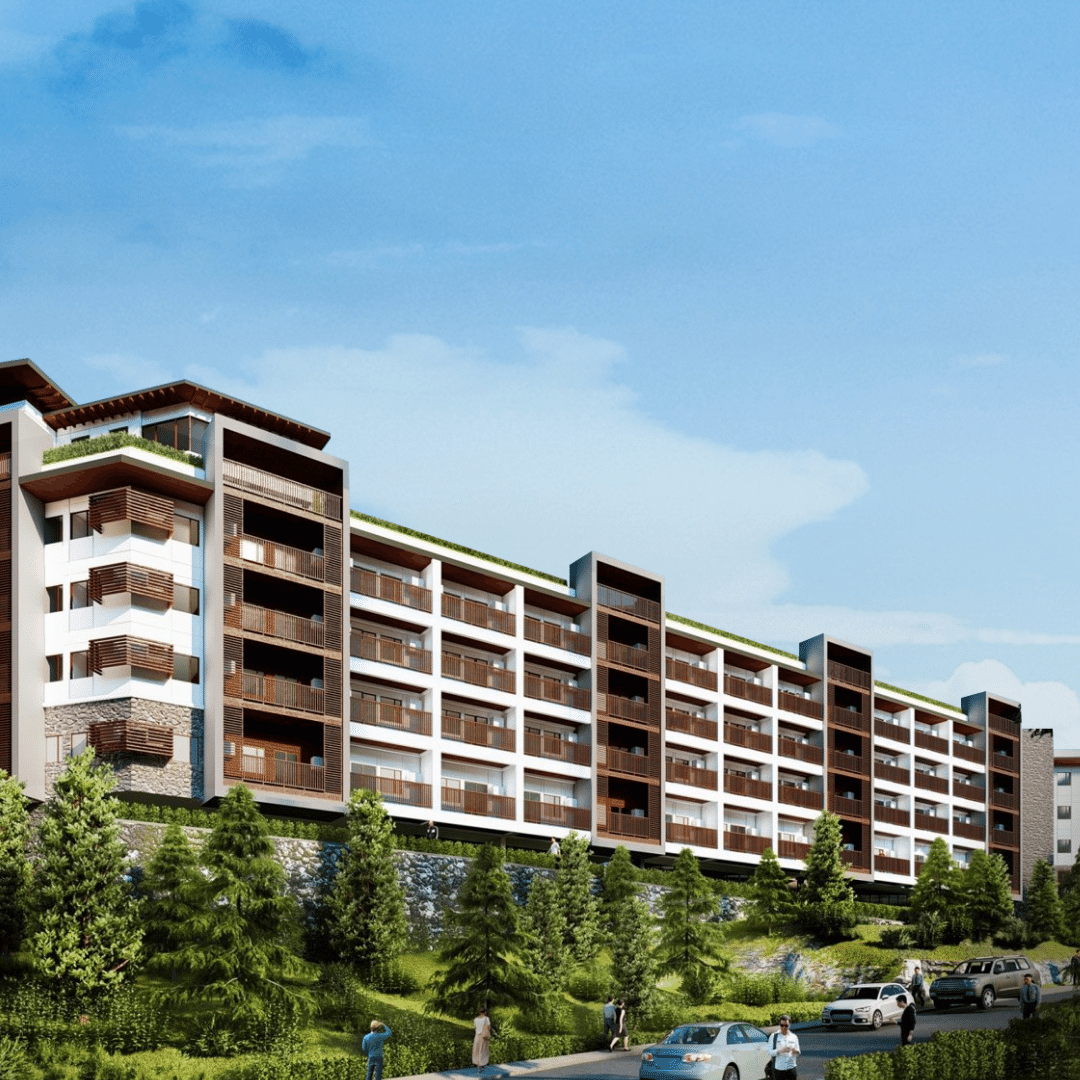
The examination throughout INQ Talks finds expression in the Vista Residences University Series, a portfolio of condominium properties located near leading colleges and university clusters.
The high-rise developments respond to a market in which proximity is only the starting point. City locations place central business districts, transport hubs, retail parks, essential establishments, and everyday destinations within closer reach, while residential spaces and amenities support the rhythms of study, rest, and recreation. For parents and students, this means a home in the sky that can make daily routines more manageable and provide the conveniences and comforts of modern living. For buyers and investors, University Series offers access to academic activities and a distinct demand for well-positioned condominium properties.
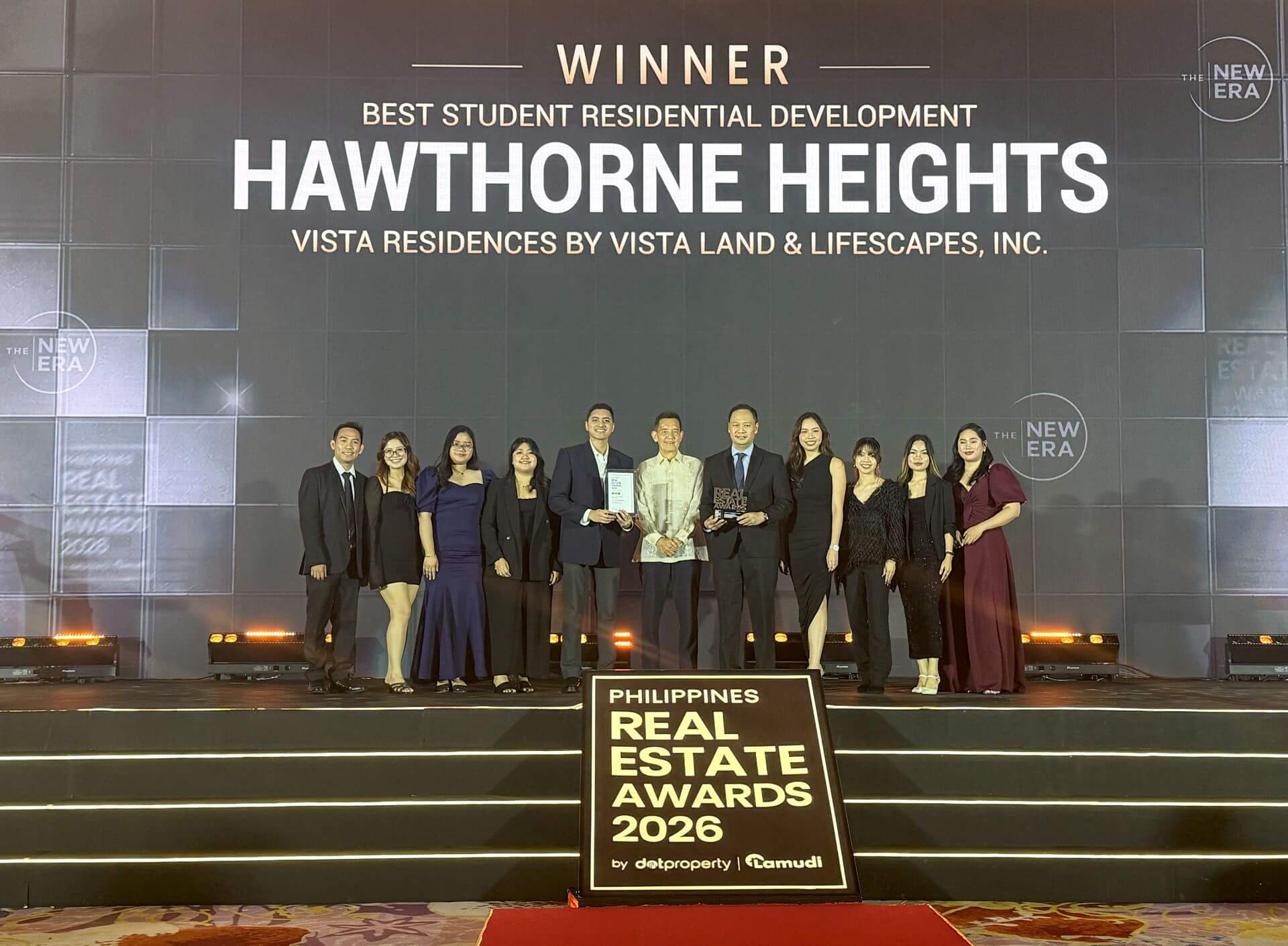
Vista Residences has developed 14 condominiums in the University Series, strengthening its presence near established academic institutions. Eleven are located near Taft Avenue and España Avenue in Manila: Crown Tower University Belt, 878 España, Vista Recto, Bradbury Heights, Vista Heights, and Tennyson Heights near the University Belt; Vista Taft, Vista GL Taft, Plumeria Heights, Sky Arts Manila, and Kizuna Heights, while three are along Katipunan Avenue in Quezon City: Vista 309 Katipunan, Vista Pointe, and Hawthorne Heights.
Through the University Series, Vista Residences brings campus convenience, city connectivity, and condominium living into one residential proposition: academic addresses designed to remain relevant from university life to professional prospects.
To know more about Vista Residences University Series, visit www.vistaresidences.com.ph and follow @VistaResidencesOfficial.
.png)